




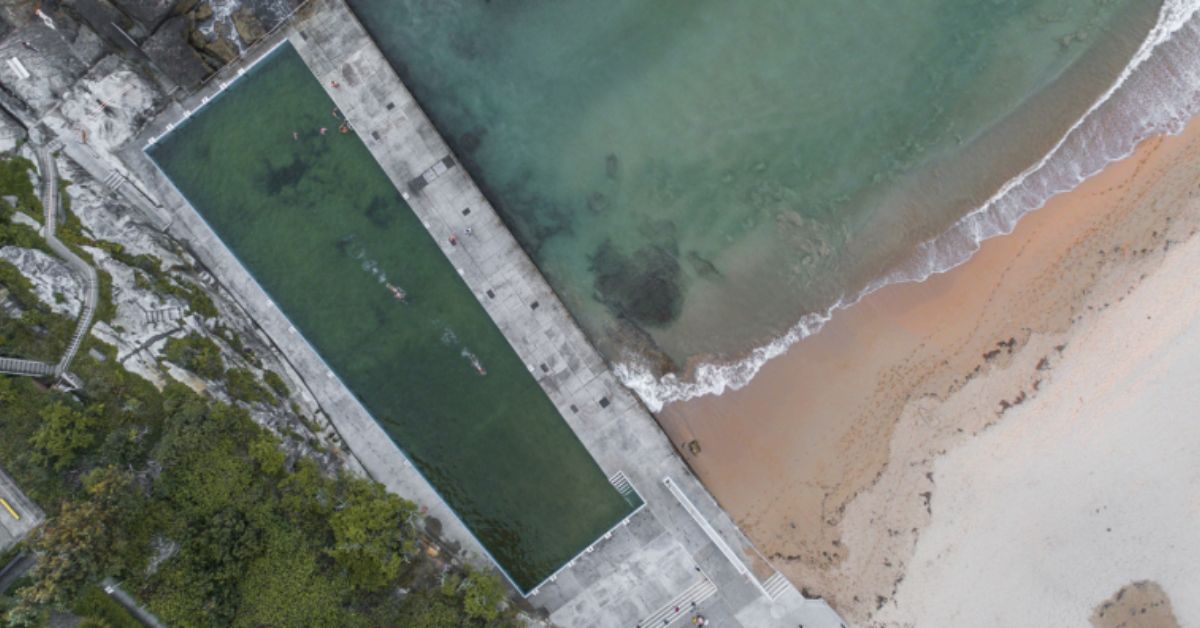
The rock pool tucked beneath the cliff at the northern end of Queenscliff Beach is among the last ocean baths built on the northern beaches before the Second World War, with construction beginning in 1937 and swimmers diving in by mid-1938, driven into existence less by civic planning than by a string of fatal shark attacks that made delay impossible to justify.
By the time a supervised swimming pool on that stretch of coast became a serious conversation, four people had been killed or badly injured by sharks within a short distance of Queenscliff Beach over barely two years. A fifth had disappeared entirely. Fear, rather than bureaucratic enthusiasm, is the reason the pool exists at all.
The Summer That Changed Everything
The cascade of attacks that forced the issue began in January 1934, when Colin Grant, a 22-year-old Queenscliff SLSC member, was attacked by a shark at Queenscliff Beach and taken to Manly Hospital, where his left leg was amputated below the knee. Two months later, 17-year-old Frank Riley was attacked at Dee Why and died on the beach.

The month after that, 15-year-old Leon Hermes was attacked at North Steyne and died in Manly Hospital. In March 1935, Herbert McFarlane, 22, was attacked at North Narrabeen and also died in Manly Hospital. In June 1935, Queenscliff SLSC wrote to the two local authorities whose boundaries met at this stretch of coast, urging the construction of a rock pool at the northern end of Manly Beach.
The surf club also made a practical observation: when floodwaters from Manly Lagoon emptied into the ocean, thousands of small fish were swept out with them, attracting sharks, while the discolouration of the water from those floodwaters made it harder for lifesavers to spot the threat. The two authorities responded that there was no money available.
Eight months later, in February 1936, 14-year-old David Paton was taken by a shark at South Steyne. His body was never recovered.
A Clydesdale Horse and a Trolley on Rails
By the end of 1936, one of the two authorities had included the rock pool in its programme of works for the following year. But the question of who would pay was far from settled.
Manly was at that time building a seawall along North Steyne and needed good quality stone. The excavation of the pool would produce rock, so arrangements were made to sell the stone to the neighbouring authority for use in the seawall construction, at 25 shillings per perch plus three shillings and sixpence for cartage.
The excavated rock was loaded onto a trolley running on rails across the beach, pulled by a Clydesdale horse, from the pool site to the seawall.
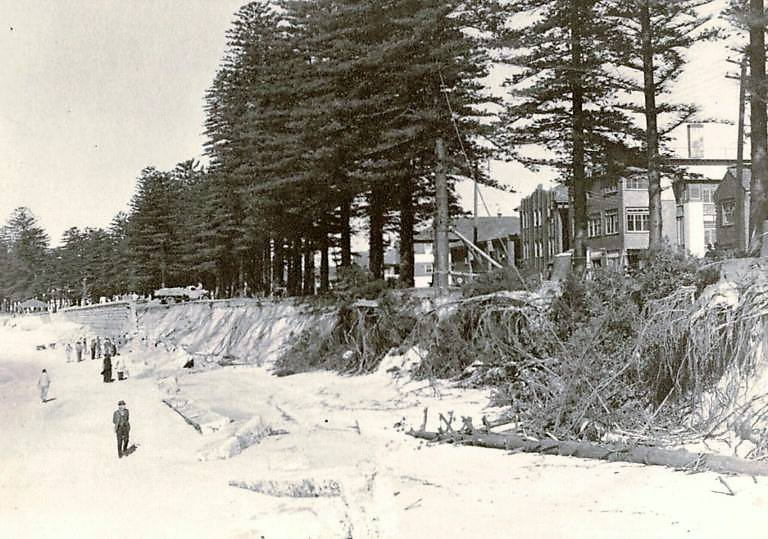
The practical arrangement suited everyone, but the financial question remained unresolved. Warringah Shire had started work on the pool on the assumption that Manly Municipality would contribute half the cost, given that the majority of people likely to use the pool lived in Manly rather than Warringah.
Manly’s aldermen voted on the matter repeatedly throughout 1937 and into 1938, then deferred it again and again.
Two Years of Delays, One Very Frank Letter
By June 1938, Warringah Shire had written to Manly Municipality with a detailed accounting of what had already been spent: £1,000 from a government grant, £1,000 in loan funds, and £180 from Warringah’s own reserves, totalling £2,180, with an estimated further £250 required to complete the work.

The letter noted pointedly that “the impression had been given that the Municipality of Manly would willingly bear half the cost, it being understood that statements to this effect were made at a meeting of the Queenscliff-North Steyne Progress Association.”
Manly finally agreed to contribute £250 on completion.
By mid-1938, swimmers had begun using the pool, though it was still unfinished. A string of injuries followed. As late as November 1938, the Warringah engineer admitted the pool was incomplete, and by December the surf club was formally complaining about the danger it posed to bathers. The pool was not finished to most people’s satisfaction until early 1939.
A Pool Shaped by What Was Already There
The finished pool measured 50.3 metres long and approximately 14 metres wide, cut into the rock platform and formed on all four sides by concrete. But it was narrower at its western end than its eastern end, and that irregularity was not an accident or an oversight. The low-flow pipes connecting Manly Lagoon and the Pacific Ocean, built in 1910, ran along the western edge of the site and could not be moved.
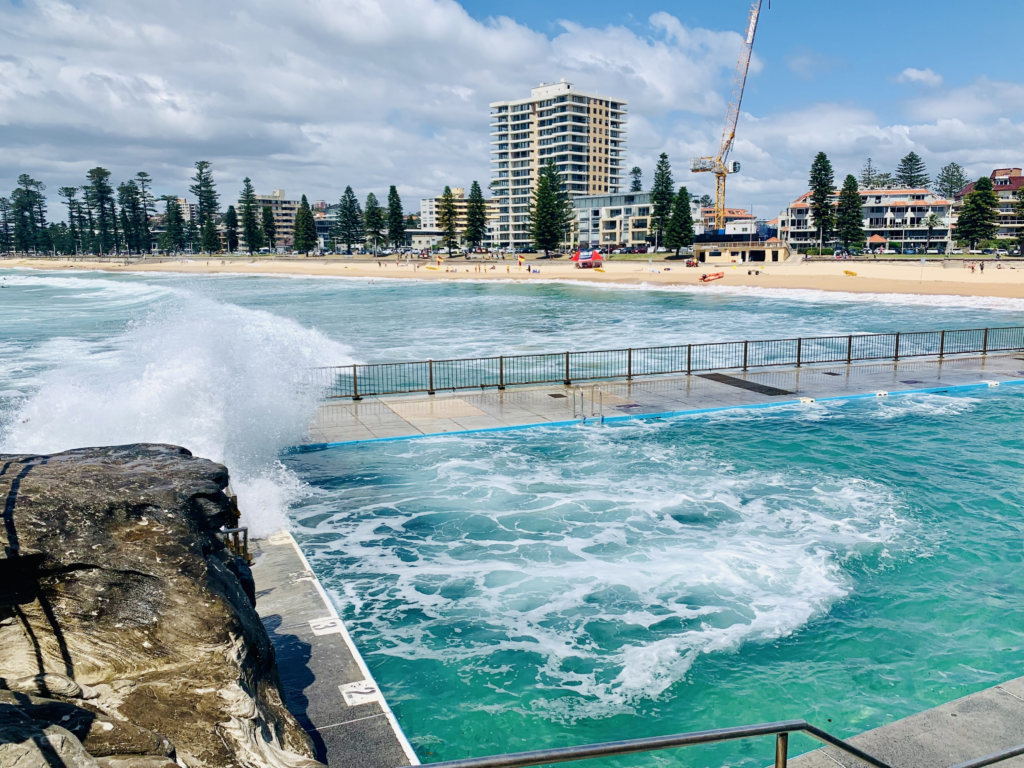
The pool had to fit between the cliff on one side and those pipes on the other, which is why it was narrower at the western end and why access was available from three sides only, the western, northern and eastern walls, with the southern wall chained off because it was too narrow for safe passage.
That constraint has never changed. The pool remains narrower at its western end than its eastern end, a physical record of the infrastructure that was already on site when it was built.
At the time of construction, Queenscliff SLSC’s timber clubhouse sat just metres west of the pool. In 1939, a new clubhouse was built on the site of the current building, and the old one near the pool was demolished soon after.
War, Neglect and a Valve That Wouldn’t Open
Once the pool was finished, the two authorities proved more cooperative on subsequent improvements. They split the cost of additional concrete work at the western end in 1940 and the installation of pool lighting in 1941. Then the war intervened. From early 1942, the beach was surrounded by barbed wire and expenditure on swimming facilities was suspended.
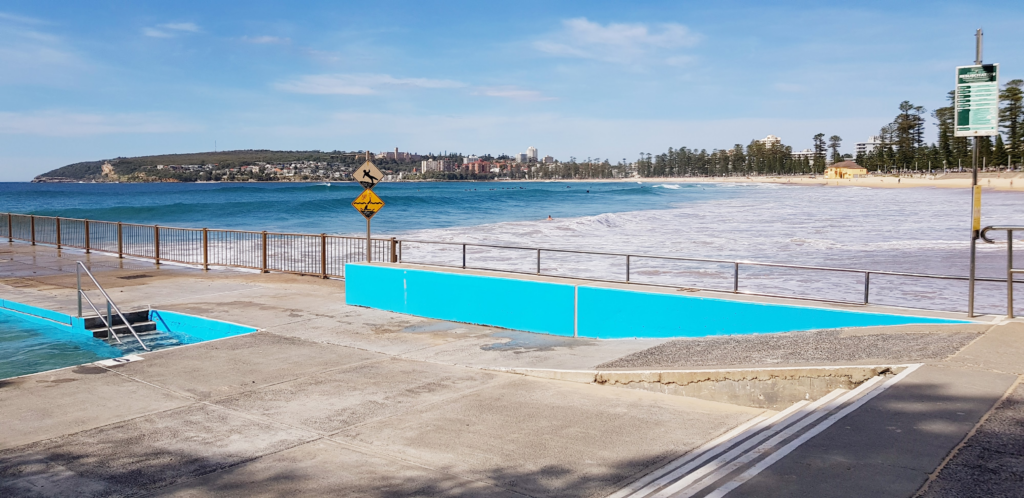
The pool was not well maintained through the wartime years. By 1944, the valve used to empty it had been closed for so long it could not be opened, and the western end was filling with sand and seaweed. In June 1945, the surf club described the pool’s condition as “deplorable”: half-filled with sand, the iron railing along the southern wall so badly rusted as to be dangerous. By early 1946, the two authorities had finally agreed to share the cost of repairs.
The years that followed brought recurring arguments about maintenance costs and repairs. In January 1948, club captain Dudley Parkhill told the Sydney Morning Herald that the Queenscliff rock pool was “a menace to surfers and a disgrace” and that since June 1947, when heavy seas had carried away the railing, there had been 47 accidents at the pool.
The repairs were eventually undertaken, costs shared. In 1952 the floor was concreted at a cost of £350.
An Improving Relationship
By March 1960, the surf club’s tone had shifted entirely. A formal letter expressed “the Club’s thanks for the work done and improvements made on the Queenscliff pool, and advising that the pool is in the best and cleanest condition it has been for a number of years.”
More substantial work was undertaken in 1960, including a concrete retaining wall at the base of the cliff, a promenade with drainage gutters, improved access from the clifftop, and a concrete floor across the whole pool area. The cost was £6,500.
One authority’s share was not settled until 1964, a delay that prompted a letter of remarkable diplomatic delicacy: “There is an understanding of their precarious position, and the matter will not be raised again.”
What that financial precariousness involved is not recorded. The money came through in 1964.
The Pool Today
The most significant change to the pool in the decades since came in 1999, when the low-flow pipes were extended from the western end of the pool to just beyond the eastern end, at the same height as the southern wall. That extension created the wide promenade now running along the southern side of the pool.
Queenscliff Amateur Swimming Club was founded in the 1960-61 season. The two-storey brick clubhouse on the site of the old surf club was opened in 1962. The pool was heritage-listed and in 2014 was renovated to include widened ramp access, safer stairs and a new ladder at the deep end.
It remains open 24 hours a day, free of charge, at the northern end of Queenscliff Beach, cleaned on a rotating roster by Northern Beaches authorities. Six lanes. Fifty metres. Narrower at the western end than the eastern end, just as it was designed to be, and for exactly the same reasons it always was.
Published 30-April-2026