




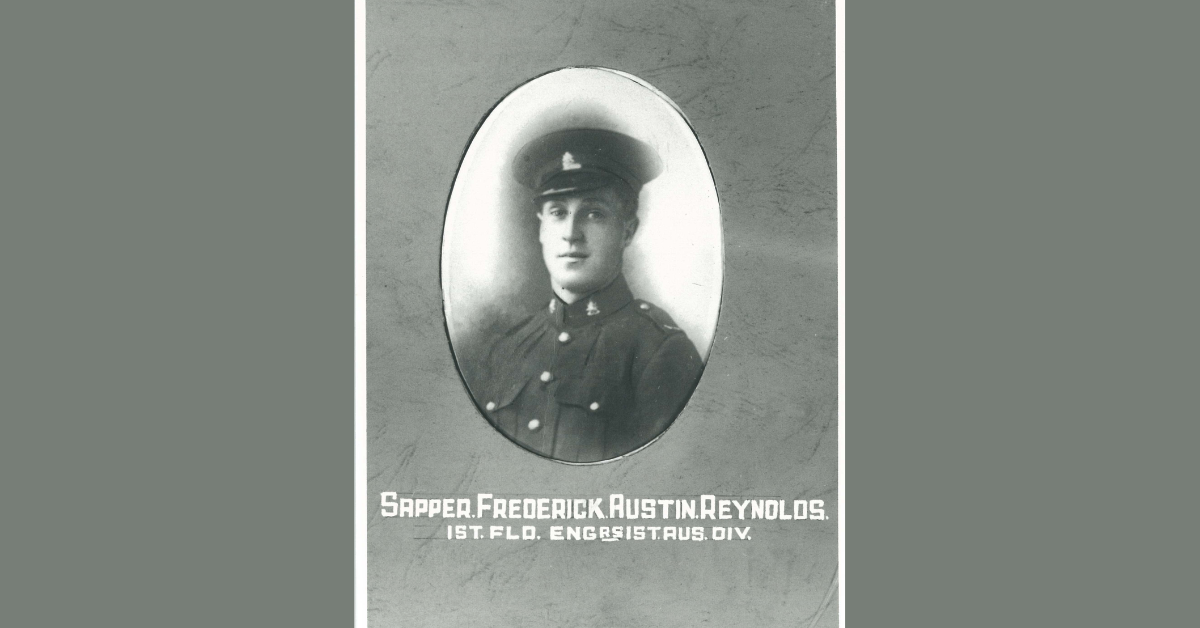
Before he was a fallen soldier in a foreign land, Frederick Austin Reynolds was a local hero in Queenscliff who was better known for saving lives in the Manly surf than for the uniform he wore.

From South Steyne to the Sultan’s Shores
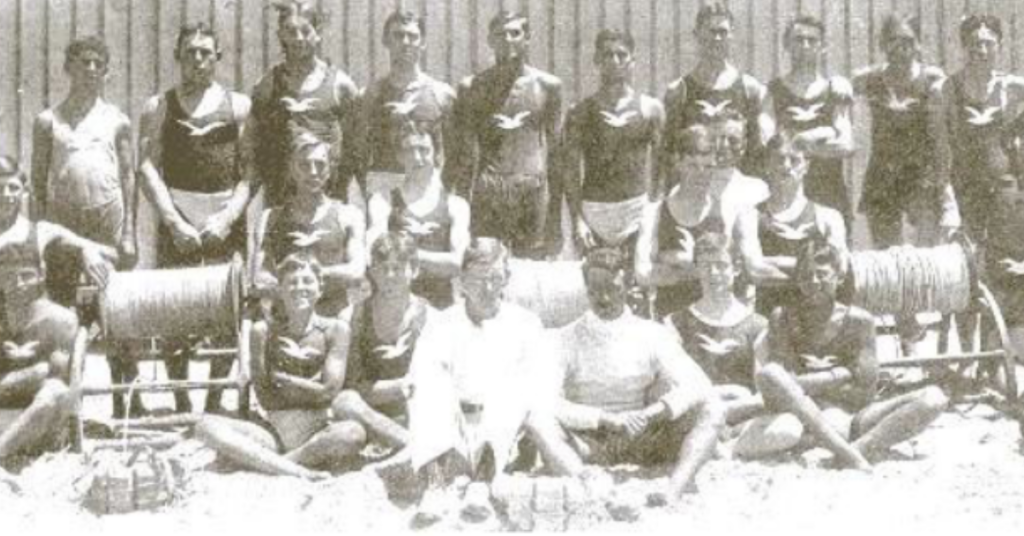
Photo Credit: Northern Beaches Library
Before he was a soldier, Frederick Austin Reynolds was a man defined by the ocean and his community on the northern beaches. Growing up in a home called Greyfells in Queenscliff, he was a prominent member of the Manly Seagull Surf & Life Saving Club. He was well-known for his bravery in the water long before he ever wore a uniform, having been credited with saving multiple lives as a lifesaver at South Steyne.
In his professional life, he was a skilled electrical engineer, a trade he mastered through a local apprenticeship and later practiced while stationed at Chowder Bay. Those who knew him described a fair-complexioned young man with blue eyes who possessed both the technical mind of an engineer and the selfless heart of a rescuer.
The Ultimate Sacrifice at Anzac Cove
Division
Photo Credit: Northern Beaches Library
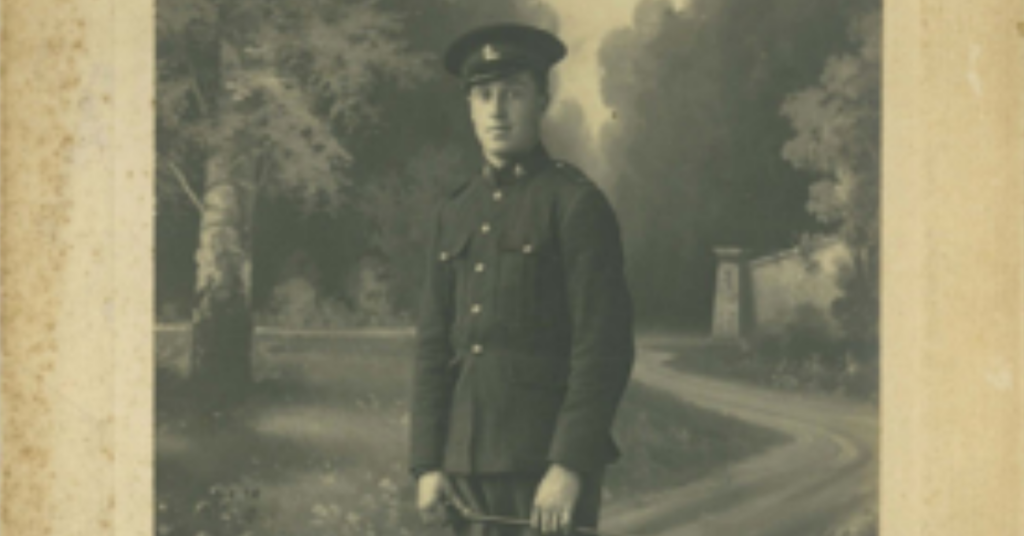
When the call to serve came, Reynolds joined the 1st Field Company of the Australian Engineers and eventually found himself aboard the flagship of the fleet heading toward the Turkish peninsula. In his final correspondence to his family, he wrote with a sense of quiet pride about the honour of being in the first boat to go ashore as part of a specialised demolition party.
He understood the risks, stating that while not everyone would return, he was prepared to face whatever came next. This bravery was put to the test the moment the boats hit the sand. Rather than seeking cover, he drew upon his years of training as a lifesaver. On three separate occasions, he went back into the line of fire to pull wounded or struggling men from the water. He successfully brought two soldiers to the safety of the beach but was killed while attempting to rescue a third comrade.
A Community Legacy That Never Fades
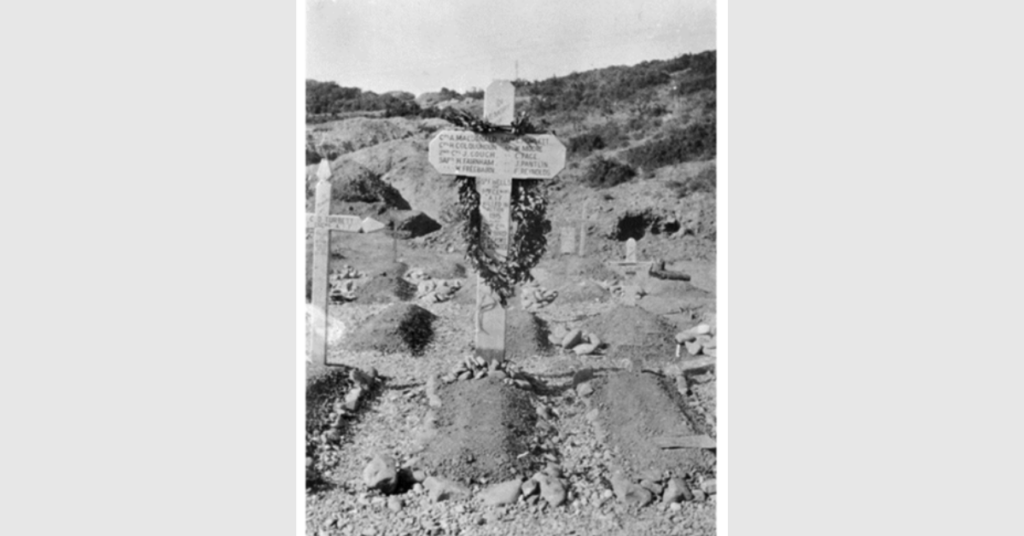
Photo Credit: Northern Beaches Library
The loss of the twenty-year-old left a profound hole in the Queenscliff and Manly communities. His family endured a long period of uncertainty, as early reports incorrectly listed his death as occurring weeks later; it took nearly a year for the military to confirm he had actually fallen on the very first day of the campaign.
His father, a bricklayer who relied on his son as the family’s main financial support, struggled to navigate the aftermath of the tragedy. Despite the passage of over a century, the memory of the “First Anzac” from the northern beaches is carefully preserved. A Lone Pine tree now grows in Freshwater near a plaque telling his story, and his name is still spoken with reverence at annual military dinners. From the sands of Manly to the Shrapnel Valley Cemetery, his journey remains a powerful reminder of a local hero who died exactly as he lived: saving others.
Published Date 22-April-2026